
Verbs
Aprende a comparar verbos en español: tiempos, modos y conjugaciones, diferencias entre verbos regulares e irregulares, y usos comunes para hablar con precisión.
Learn to compare verbs in Spanish: tenses, moods, and conjugations, differences between regular and irregular verbs, and common uses for speaking with precision.
Verbs show actions, events, and states, so they are crucial for making sentences. This guide covers the main types and important examples.
Types
Verbs fall into categories based on meaning and grammar: action, state, and auxiliary. Each type plays a different role in sentences.
Los verbos se clasifican en categorías según su significado y gramática: acción, estado y auxiliar. Cada tipo cumple un papel diferente en las oraciones.
Regular
Regular verbs follow predictable patterns in each tense, so you can apply the same endings once you learn the rules. Examples use the present tense.
-ar Verbs
-ar verbs are the most common and set the pattern for many learners. They end in -o, -as, -a, -amos, -áis, -an in the present.
| Spanish Word(s) | English Translation(s) | |
|---|---|---|
| hablar | to talk | |
| enseñar | to teach | |
| caminar | to walk |
Los verbos terminados en -ar son los más comunes y establecen el patrón para muchos aprendices. Terminados en -o, -as, -a, -amos, -áis, -an en el presente.
We walk through the park every afternoon.
-er Verbs
-er verbs follow a similar pattern with endings like -o, -es, -e, -emos, -éis, -en in the present. They include common everyday actions.
| Spanish Word(s) | English Translation(s) | |
|---|---|---|
| comer | to eat | |
| beber | to drink | |
| aprender | to learn |
Los verbos terminados en -er siguen un patrón similar con terminaciones como -o, -es, -e, -emos, -éis, -en en el presente. Incluyen acciones cotidianas comunes.
He learns German at a school near home.
-ir Verbs
-ir verbs are very similar to -er verbs but have slight differences in some tenses. Present endings are -o, -es, -e, -imos, -ís, -en.
| Spanish Word(s) | English Translation(s) | |
|---|---|---|
| vivir | to live | |
| escribir | to write | |
| recibir | to receive |
Los verbos terminados en -ir son muy parecidos a los -er, pero tienen pequeñas diferencias en algunos tiempos. Las terminaciones en presente son -o, -es, -e, -imos, -ís, -en.
I live in an apartment downtown.
Los verbos regulares siguen patrones predecibles en cada tiempo, así que puedes aplicar las mismas terminaciones una vez que aprendes las reglas. Los ejemplos usan el presente.
I speak with my friend on the phone.
Important
Some verbs are so common that it's worth learning them early, including irregular forms and useful expressions.
ser (to be)
Ser marks identity, origin, time, and more. It is irregular in the present and used for lasting qualities.
| Spanish Word(s) | English Translation(s) | |
|---|---|---|
| soy | I am | |
| eres | you are | |
| es | he/she/it is | |
| somos | we are | |
| sois | you all are | |
| son | they are |
Ser indica identidad, origen, tiempo y más. Es irregular en el presente y se usa para cualidades duraderas.
You are my best friend since childhood.
estar (to be)
Estar shows temporary states, locations, and ongoing actions. It is irregular in the present and often used with conditions and feelings.
| Spanish Word(s) | English Translation(s) | |
|---|---|---|
| estoy | I am | |
| estás | you are | |
| está | he/she/it is | |
| estamos | we are | |
| estáis | you all are | |
| están | they are |
Estar muestra estados temporales, ubicaciones y acciones en curso. Es irregular en el presente y se usa frecuentemente con condiciones y sentimientos.
I am tired after working.
tener (to have)
Tener expresses possession, age, and many common idioms. It is irregular in the present and used in set phrases like tener que (to have to).
| Spanish Word(s) | English Translation(s) | |
|---|---|---|
| tengo | I have | |
| tienes | you have | |
| tiene | he/she/it has | |
| tenemos | we have | |
| tenéis | you all have | |
| tienen | they have |
Tener expresa posesión, edad y muchas expresiones idiomáticas comunes. Es irregular en el presente y se usa en frases hechas como tener que (tener que).
I am twenty years old this month.
ir (to go)
Ir shows movement and is used in many periphrastic tenses. It is irregular in the present and often followed by a plus an infinitive or place.
| Spanish Word(s) | English Translation(s) | |
|---|---|---|
| voy | I go | |
| vas | you go | |
| va | he/she/it goes | |
| vamos | we go | |
| vais | you all go | |
| van | they go |
Ir indica movimiento y se usa en muchos tiempos perifrásticos. Es irregular en el presente y a menudo va seguido de a más un infinitivo o lugar.
I go to school every day.
Algunos verbos son tan comunes que vale la pena aprenderlos temprano, incluyendo formas irregulares y expresiones útiles.
Summary
Verbs tell what happens, so start by learning key regular endings and the most useful irregular verbs like ser, estar, tener, and ir. Practice them in short sentences to build confidence.
Los verbos dicen qué pasa, así que empieza aprendiendo las terminaciones regulares clave y los verbos irregulares más útiles como ser, estar, tener y ir. Practícalos en oraciones cortas para ganar confianza.


Suggested Reading

Practice Makes Perfect: Basic Spanish by Dorothy Richmond
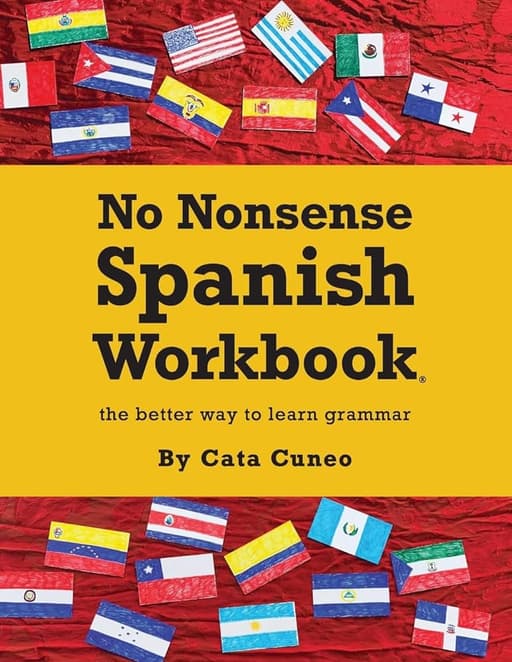
No Nonsense Spanish Workbook by Eric W. Vogt & My Daily Spanish

The Everything Learning Spanish Book by Julie Gutin
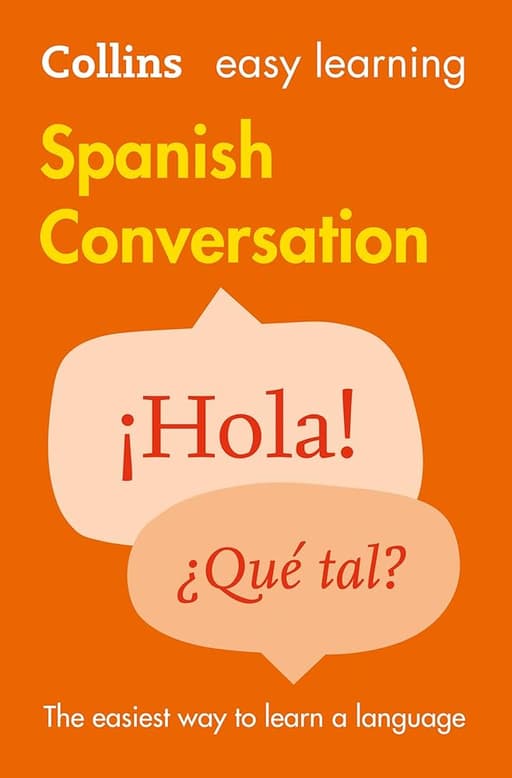
Collins Easy Learning: Spanish Conversation by Collins Dictionaries

Practice Makes Perfect: Spanish Conversation by Jean Yates
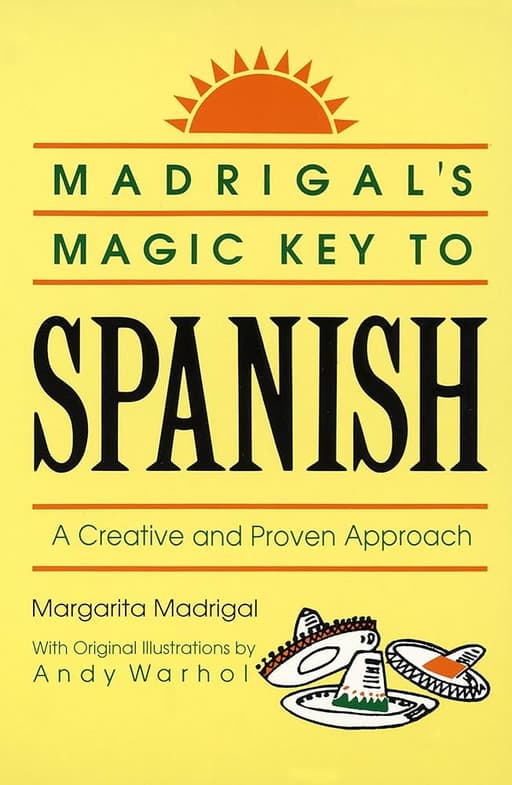
Madrigal's Magic Key to Spanish by Margarita Madrigal
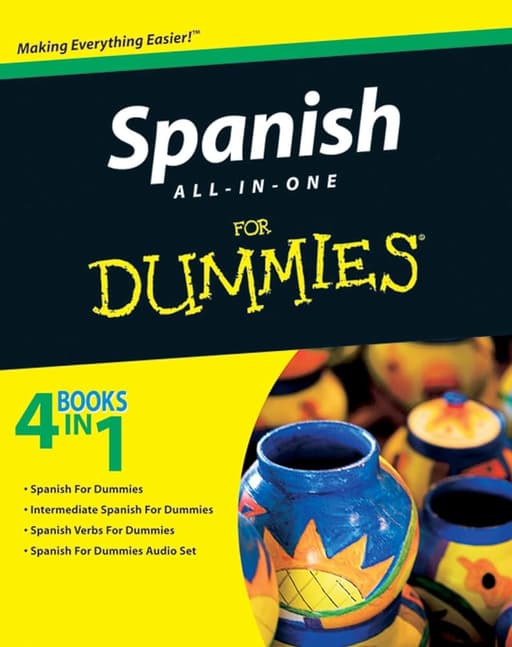
Spanish All-In-One For Dummies by Susana Wald & Cecie Kraynak
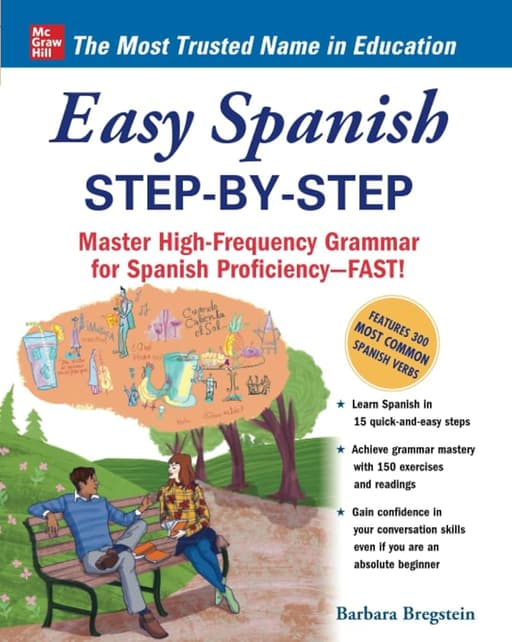
Easy Spanish Step-By-Step by Barbara Bregstein

Barron’s 501 Spanish Verbs by Christopher Kendris and Theodore Kendris
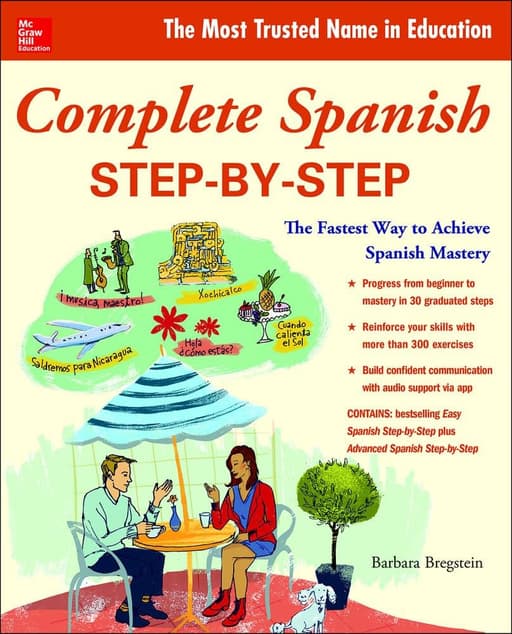
Complete Spanish Step-By-Step by Barbara Bregstein

Practice Makes Perfect: Complete Spanish Grammar by Gilda Nissenberg
All content was written by our AI and may contain a few mistakes. We may earn commissions on some links. Last updated: Wed Dec 3, 2025, 6:21 PM