
Dative vs Akkusativ
Dieser Leitfaden erklärt die Unterschiede zwischen Dativ und Akkusativ im Deutschen, wann welcher Kasus gebraucht wird, sowie Artikel-, Pronomen- und Satzbeispiele für sicheren Gebrauch, inklusive leichter Übungen.
This guide explains the differences between the dative and accusative cases in German, when each case is used, and includes articles, pronouns, and sentence examples for clear usage, with simple exercises.
In German, whether you use the dative or accusative case depends on the verb, preposition, and sometimes whether an action crosses from one place to another. This guide covers the key differences with clear examples.
Memory
The dative case marks the indirect recipient of an action, while the accusative case marks the direct object that is acted upon. Think of the accusative as "who or what is affected" and the dative as "to whom or for whom" something is given.
Der Dativ kennzeichnet den indirekten Empfänger einer Handlung, während der Akkusativ das direkte Objekt markiert, das beeinflusst wird. Denke daran, dass der Akkusativ „wen oder was ist betroffen“ ist und der Dativ „wem oder für wen“ etwas gegeben wird.
Key Verbs
Some verbs naturally take the dative for the recipient and the accusative for the thing given or moved. Others require one case or the other consistently. Learn common verbs with each case.
| German Verb | Meaning | Case | |
|---|---|---|---|
| geben | to give | dative + accusative | |
| zeigen | to show | dative + accusative | |
| helfen | to help | dative | |
| fragen | to ask | accusative or dative depending on construction | |
| kaufen | to buy | accusative |
Einige Verben nehmen natürlicherweise den Dativ für den Empfänger und den Akkusativ für das Gegebene oder Bewegte. Andere verlangen konsequent einen der beiden Fälle. Lerne häufige Verben mit jedem Fall.
Prepositions
Prepositions always require a specific case. Some are always dative, some always accusative, and a few change depending on whether they indicate movement. Learn prepositions by case group.
| German Preposition | Case | Meaning | |
|---|---|---|---|
| mit | dative | with | |
| nach | dative | after, to | |
| zu | dative | to | |
| für | accusative | for | |
| durch | accusative | through | |
| gegen | accusative | against | |
| in | dative or accusative | in / into |
Präpositionen verlangen immer einen bestimmten Fall. Manche sind immer Dativ, andere immer Akkusativ, und einige ändern sich je nachdem, ob sie Bewegung anzeigen. Lerne Präpositionen nach ihrer Fallgruppe.
Changing Prepositions
Some prepositions like in, auf, an, and über take dative when indicating location and accusative when indicating movement toward a place. So the case signals whether the action stays put or goes somewhere.
Small Examples
Here are quick pairs showing the difference between location (dative) and movement (accusative) with changing prepositions.
Einige Präpositionen wie in, auf, an und über nehmen den Dativ, wenn sie den Standort anzeigen, und den Akkusativ, wenn sie Bewegung in Richtung eines Ortes ausdrücken. Der Fall signalisiert also, ob die Handlung bleibt oder sich bewegt.
Summary
Use the dative case for indirect objects and after certain prepositions, and use the accusative case for direct objects and after different prepositions. Pay attention to whether a preposition signals movement to choose the right case. Practice with typical verbs and prepositions until the patterns feel natural.
Three Important Things
Learn the difference in German
Practice common verbs and prepositions
Notice location vs movement with changing preps
Suggested Reading
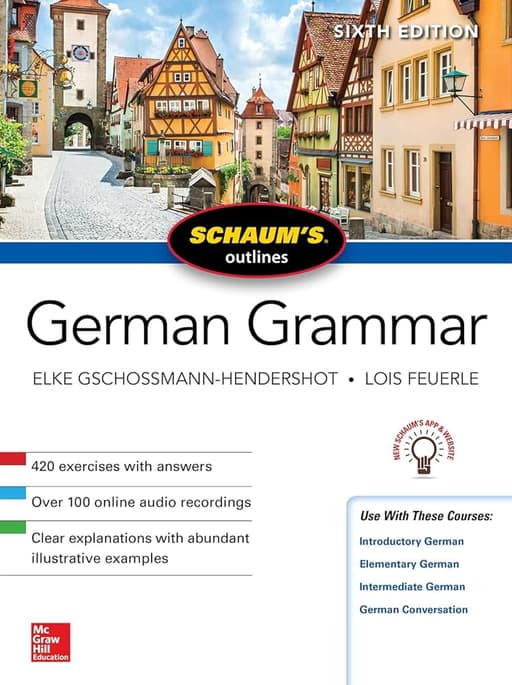
Schaum’s Outline of German Grammar by Bruce Donaldson & others

Assimil: German with Ease by Assimil (publisher)
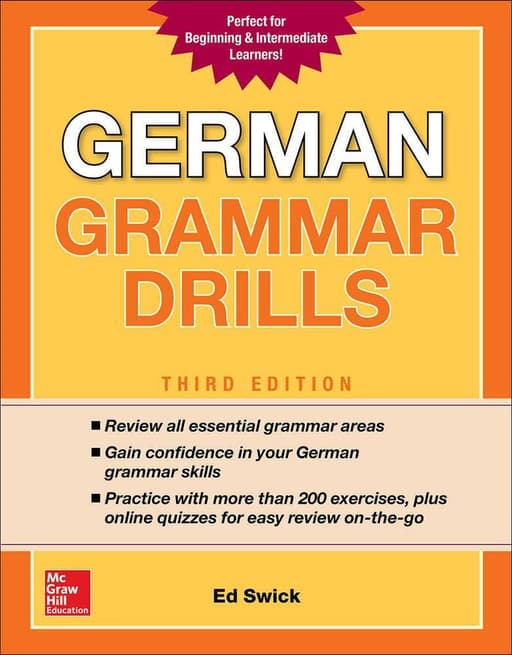
German Grammar Drills by Astrid Henschel

German in Review by Robert Di Donato (et al.)

Easy German Step-By-Step by Ed Swick

Basic German: A Grammar and Workbook by Heiner Schenke & Karen Seago

German All-in-One For Dummies by Wald & Kraynak

Deutsch im Blick by University of Texas (et al.)

The Everything Learning German Book by Edward Swick

Practice Makes Perfect: Complete German Grammar by Ed Swick
All content was written by our AI and may contain a few mistakes. We may earn commissions on some links. Last updated: Wed Dec 3, 2025, 6:21 PM