
Numbers
Entdecke das deutsche Vokabular rund um Zahlen in der Mathematik: Ziffern, Brüche, Dezimalzahlen, Prozente, Mengenangaben und Rechenoperationen. Ideal für Lernende, die Mathematik auf Deutsch sicher anwenden möchten.
Discover the German vocabulary around numbers in mathematics: digits, fractions, decimals, percentages, quantities and arithmetic operations. Ideal for learners who want to use math in German confidently.
Numbers are essential for everyday tasks like shopping, telling time, and giving prices. This guide covers cardinal numbers, ordinals, and useful expressions for counting and quantifying.
Cardinal Numbers
Cardinal numbers are used for counting and answering "how many." They follow a logical pattern from 0 to 20, with tens and larger numbers built systematically. Here are the key numbers from 0 to 20.
| German Word(s) | English Word(s) | |
|---|---|---|
| null | zero | |
| eins | one | |
| zwei | two | |
| drei | three | |
| vier | four | |
| fünf | five | |
| sechs | six | |
| sieben | seven | |
| acht | eight | |
| neun | nine | |
| zehn | ten | |
| elf | eleven | |
| zwölf | twelve | |
| dreizehn | thirteen | |
| vierzehn | fourteen | |
| fünfzehn | fifteen | |
| sechzehn | sixteen | |
| siebzehn | seventeen | |
| achtzehn | eighteen | |
| neunzehn | nineteen | |
| zwanzig | twenty |
Kardinalzahlen werden zum Zählen und Beantworten der Frage "Wie viele?" verwendet. Sie folgen einem logischen Muster von 0 bis 20, wobei Zehner und größere Zahlen systematisch aufgebaut sind. Hier sind die wichtigsten Zahlen von 0 bis 20.
I bought three apples.
Tens
Tens form the basis for larger numbers and are used in multiples like 30, 40, and so on. Numbers from 21 to 99 combine units and tens with "und" between them. Here are the tens from 20 to 100.
| German Word(s) | English Word(s) | |
|---|---|---|
| zwanzig | twenty | |
| dreißig | thirty | |
| vierzig | forty | |
| fünfzig | fifty | |
| sechzig | sixty | |
| siebzig | seventy | |
| achtzig | eighty | |
| neunzig | ninety | |
| hundert | hundred |
Zehner bilden die Basis für größere Zahlen und werden in Vielfachen wie 30, 40 usw. verwendet. Zahlen von 21 bis 99 kombinieren Einer- und Zehnerstellen mit "und" dazwischen. Hier sind die Zehner von 20 bis 100.
Larger Numbers
Thousands, millions, and billions follow predictable patterns and are important for prices, population, and measurements. "Eine Million" is treated like a noun and capitalized, while larger numbers like "tausend" and "Milliarde" are used in compound forms.
| German Word(s) | English Word(s) | |
|---|---|---|
| tausend | thousand | |
| eine Million | one million | |
| eine Milliarde | one billion | |
| eine Billion | one trillion |
Tausende, Millionen und Milliarden folgen vorhersehbaren Mustern und sind wichtig für Preise, Bevölkerungszahlen und Maße. "Eine Million" wird wie ein Substantiv behandelt und großgeschrieben, während größere Zahlen wie "tausend" und "Milliarde" in zusammengesetzten Formen verwendet werden.
Ordinal Numbers
Ordinal numbers indicate position in a sequence, such as first, second, and third. They are used for dates, rankings, and steps. Ordinals are formed by adding "-te" or "-ste" to the cardinal number, and they take adjective endings when used attributively. Here are the key ordinals from first to tenth.
| German Word(s) | English Word(s) | |
|---|---|---|
| erste | first | |
| zweite | second | |
| dritte | third | |
| vierte | fourth | |
| fünfte | fifth | |
| sechste | sixth | |
| siebte | seventh | |
| achte | eighth | |
| neunte | ninth | |
| zehnte | tenth |
Ordinalzahlen geben die Position in einer Reihenfolge an, wie erster, zweiter und dritter. Sie werden für Daten, Ranglisten und Schritte genutzt. Ordinale werden gebildet, indem man "-te" oder "-ste" an die Kardinalzahl anhängt, und sie nehmen Adjektivendungen an, wenn sie attributiv verwendet werden. Hier sind die wichtigsten Ordinalzahlen vom ersten bis zum zehnten.
Fractions
Fractions are used for parts of a whole and appear in cooking, time, and measurements. The numerator is given as a cardinal number and the denominator as an ordinal number in the appropriate gender and case. Common fractions like "ein halb" and "ein Drittel" are useful to know.
| German Word(s) | English Word(s) | |
|---|---|---|
| ein halb | a half | |
| ein Drittel | a third | |
| ein Viertel | a quarter | |
| zwei Drittel | two thirds | |
| drei Viertel | three quarters |
Brüche werden für Teile eines Ganzen verwendet und erscheinen beim Kochen, in der Uhrzeit und bei Maßen. Der Zähler wird als Kardinalzahl angegeben, der Nenner als Ordinalzahl im entsprechenden Geschlecht und Kasus. Gängige Brüche wie "ein halb" und "ein Drittel" sind nützlich zu kennen.
I'll take a half piece of cake.
Useful Expressions
Expressions for approximate numbers, prices, and quantities help make speech more natural. Phrases like "ungefähr," "etwa," and "mehr als" are commonly used with numbers. "Mal" is used for multiplication and "pro" for rates.
| German Word(s) | English Word(s) | |
|---|---|---|
| ungefähr | approximately | |
| etwa | about | |
| mehr als | more than | |
| weniger als | less than | |
| mal | times | |
| pro | per |
Ausdrücke für ungefähre Zahlen, Preise und Mengen helfen, die Sprache natürlicher wirken zu lassen. Phrasen wie "ungefähr," "etwa" und "mehr als" werden häufig mit Zahlen verwendet. "Mal" wird für Multiplikation genutzt, und "pro" für Verhältnisse.
Summary
Cardinal numbers count things, ordinals show position, and fractions divide wholes. Tens and larger numbers build systematically from smaller units. Useful expressions for approximation and quantities make numbers practical in everyday speech. Practice forming numbers aloud to get the rhythm and word order natural.
Kardinalzahlen zählen Dinge, Ordinalzahlen zeigen die Position und Brüche teilen Ganze. Zehner und größere Zahlen bauen systematisch aus kleineren Einheiten auf. Nützliche Ausdrücke für Approximationen und Mengen machen Zahlen praktisch im Alltag. Übe, Zahlen laut auszusprechen, um den Rhythmus und die Wortstellung natürlich zu beherrschen.
Suggested Reading
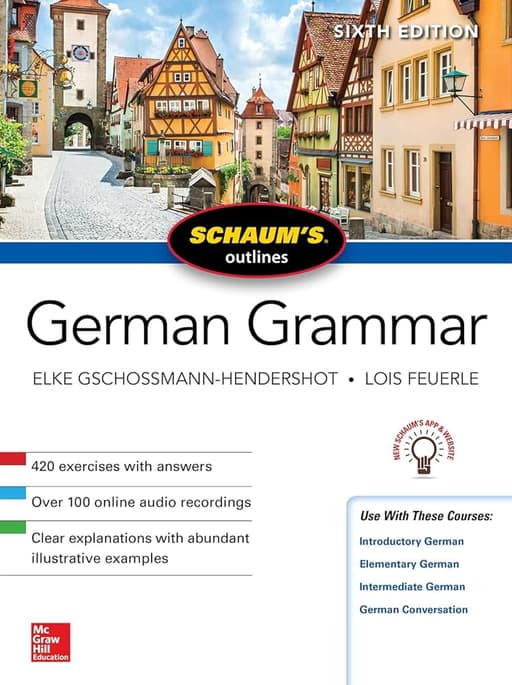
Schaum’s Outline of German Grammar by Bruce Donaldson & others

Assimil: German with Ease by Assimil (publisher)
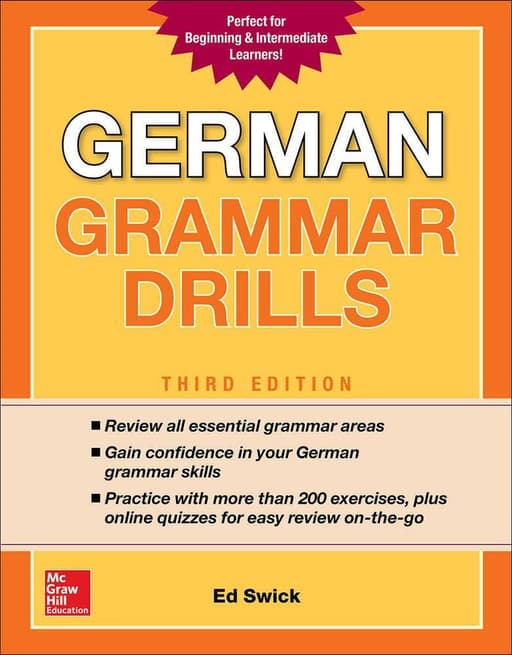
German Grammar Drills by Astrid Henschel
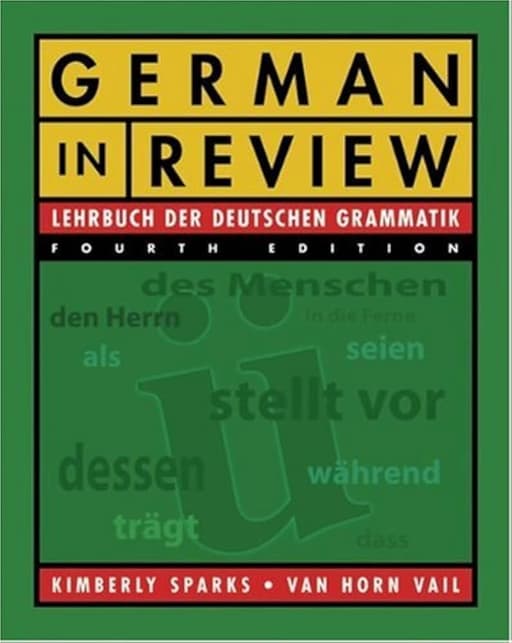
German in Review by Robert Di Donato (et al.)

Easy German Step-By-Step by Ed Swick
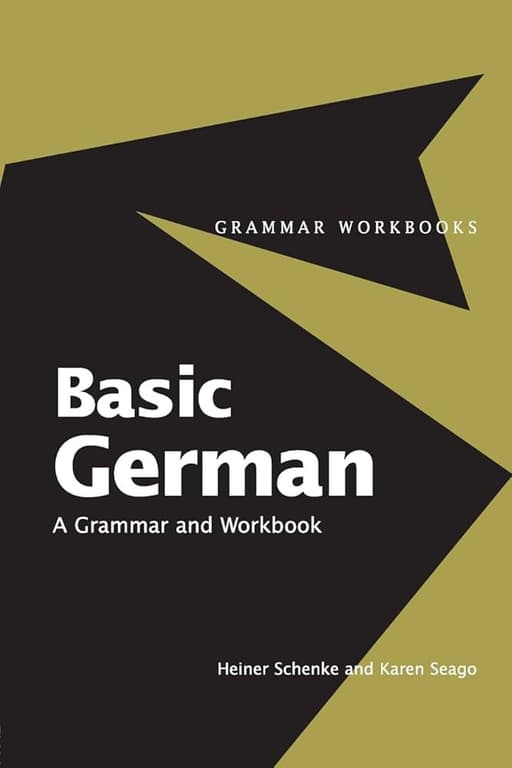
Basic German: A Grammar and Workbook by Heiner Schenke & Karen Seago

German All-in-One For Dummies by Wald & Kraynak

Deutsch im Blick by University of Texas (et al.)
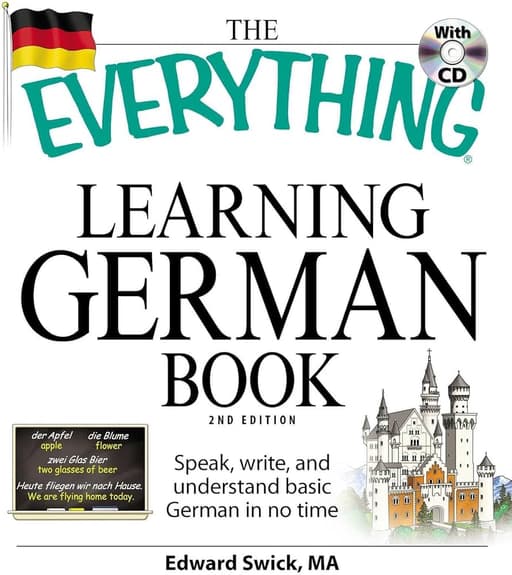
The Everything Learning German Book by Edward Swick
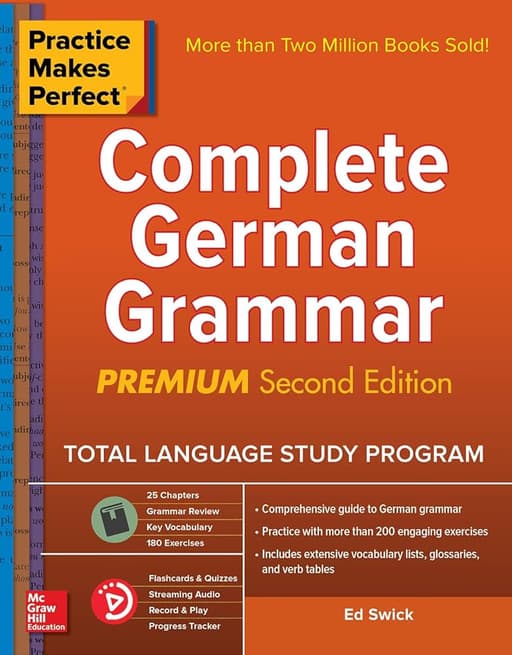
Practice Makes Perfect: Complete German Grammar by Ed Swick
All content was written by our AI and may contain a few mistakes. We may earn commissions on some links. Last updated: Wed Dec 3, 2025, 6:21 PM