
Hypothetical Situations
Explorez les situations hypothétiques en français: comprendre la voix, les temps et les modes (conditionnel, subjonctif), et les constructions avec si et inversions, avec des exemples clairs.
Explore hypothetical situations in French: understand voice, tenses and moods (conditional, subjunctive), and constructions with si and inversions, with clear examples.
Hypothetical situations in French hinge on choosing the right conditional or subjunctive mood to signal what is possible, probable, or purely imagined. This guide covers key constructions and useful expressions for each type of scenario.
Conditional
The conditional mood expresses what would happen if certain conditions were met. Use the conditional tense for polite requests, advice, and for imagining outcomes that depend on an event. Formation is straightforward: start with the infinitive stem and add the imparfait endings.
Formation
The conditional tense uses the infinitive (or irregular stem) plus endings: -ais, -ais, -ait, -ions, -iez, -aient. This aligns with the imparfait endings so they are easy to remember.
| French Tense | English Tense | |
|---|---|---|
| Je parlerais | I would speak | |
| Tu finirais | You would finish | |
| Il vendrait | He would sell |
Le temps du conditionnel utilise l’infinitif (ou le radical irrégulier) plus les terminaisons : -ais, -ais, -ait, -ions, -iez, -aient. Ces terminaisons correspondent à celles de l’imparfait, ce qui facilite leur mémorisation.
If I had more time, I would finish this project quickly.
Usage
Use the conditional for actions that are hypothetical but plausible, for polite or tentative language, and for reports of potential events. It often appears in the main clause when the condition is expressed in the "if" clause.
Employez le conditionnel pour des actions hypothétiques mais plausibles, pour un langage poli ou prudent, et pour rapporter des événements potentiels. Il apparaît souvent dans la proposition principale lorsque la condition est exprimée dans la proposition introduite par si.
Le mode conditionnel exprime ce qui se passerait si certaines conditions étaient réunies. Utilisez le conditionnel pour des demandes polies, des conseils, et pour imaginer des résultats dépendant d’un événement. La formation est simple : commencez par le radical à l’infinitif et ajoutez les terminaisons de l’imparfait.
Si Clauses
Si clauses set up conditions with si plus an indicative or subjunctive, and determine whether the main clause uses the conditional, the present, or another mood.
Si + Present
Use si + present to describe real or habitual conditions. The main clause can be in the present, future, or imperative for outcomes that are likely or routine.
If you come tonight, we'll celebrate together.
Si + Imparfait
Use si + imparfait to set up an unreal or unlikely condition in the past or present; the main clause typically uses the conditional to show what would happen if that condition were met.
Utilisez si + imparfait pour présumer une condition irréelle ou peu probable dans le passé ou le présent ; la proposition principale utilise généralement le conditionnel pour montrer ce qui se passerait si cette condition était remplie.
If I were rich, I would buy a ticket for the concert.
Si + Plus-Que-Parfait
Use si + plus-que-parfait for counterfactual conditions in the past. The main clause uses the conditional passé to express what would have occurred if the past condition had been different.
If I had known he was there, I would have come earlier.
Si Clauses Examples
Les propositions en si établissent des conditions avec si plus un mode indicatif ou subjonctif, et déterminent si la proposition principale utilise le conditionnel, le présent ou un autre mode.
Subjunctive
The subjunctive mood marks doubt, desire, necessity, or emotion, and appears after certain expressions and conjunctions. It drives hypothetical or subjective nuance rather than straightforward conditions.
It's necessary that you go to the meeting tomorrow.
Expressions
Learn common expressions that trigger the subjunctive or that frame hypotheses and conditions; these set the tone for how tentative or certain the situation is.
Apprenez les expressions courantes qui déclenchent le subjonctif ou qui encadrent des hypothèses et conditions ; elles donnent le ton sur le degré de tentativité ou de certitude de la situation.
Summary
Hypothetical situations pivot on si clauses plus conditional or subjunctive: use the conditional for imagined results, the imparfait or plus-que-parfait for unreal conditions, and the subjunctive for doubts and desires. Practice the key tenses and signal expressions to shape nuance.
Suggested Reading
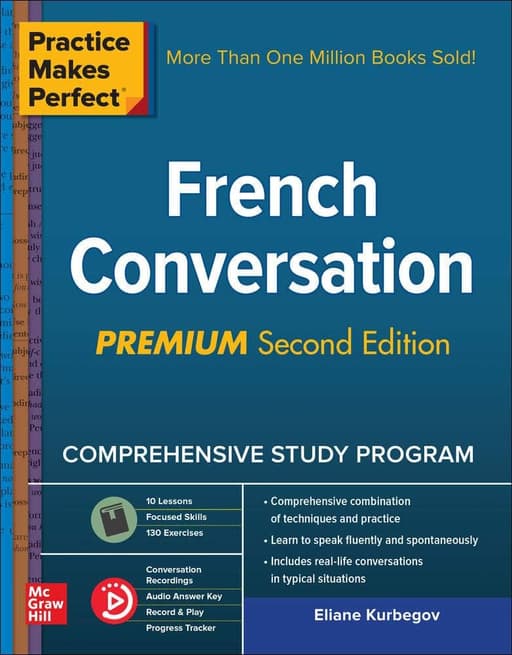
Practice Makes Perfect: French Conversation by Jean Yates

Assimil French Method by Assimil (publisher)

Grammaire en dialogues – Niveau grand débutant by Claire Miquel (and others)

Easy French Step-by-Step by Myrna Bell Rochester

French All-In-One For Dummies by Susana Wald & Cecie Kraynak

Practice Makes Perfect: Complete French All-in-One by Annie Hemingway

Collins Easy Learning French: Complete Grammar, Verbs & Vocabulary by Collins Dictionaries

Practice Makes Perfect: Complete French Grammar by Annie Hemingway

French Grammar Drills by Elaine Kurbegov
All content was written by our AI and may contain a few mistakes. We may earn commissions on some links. Last updated: Wed Dec 3, 2025, 6:21 PM